Reclaiming the Factory Glasshouses in Reșița: By The Community, for The Community
A trailblazing initiative for civic stewardship
What is this place?
A place unknown to most
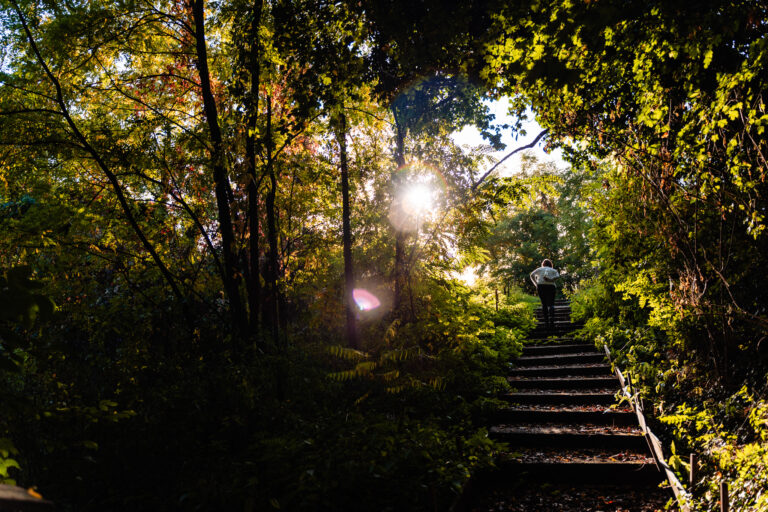
On the left bank of the Bârzava river, a 15-minute walk from the centre of Reșița, hidden at the end of a dirt road on the edge of the forest, lies a place most locals have never seen.
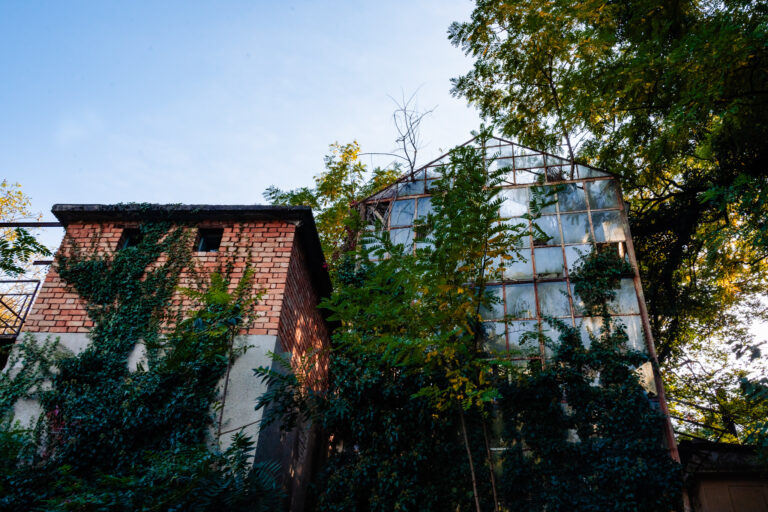
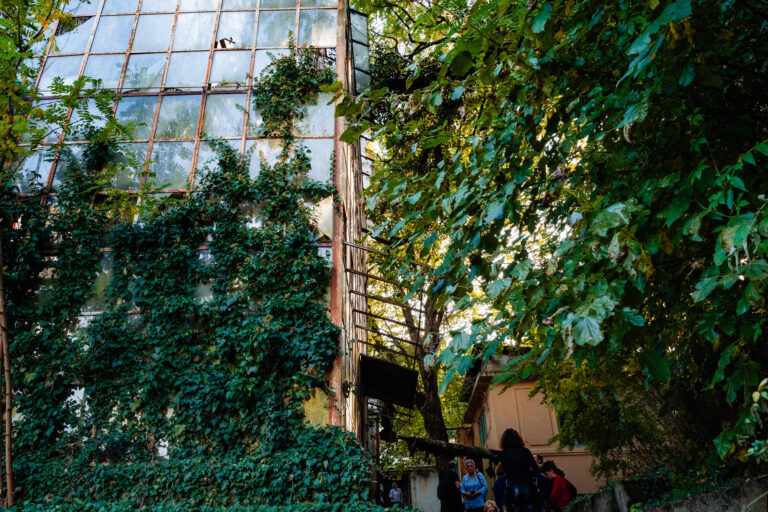
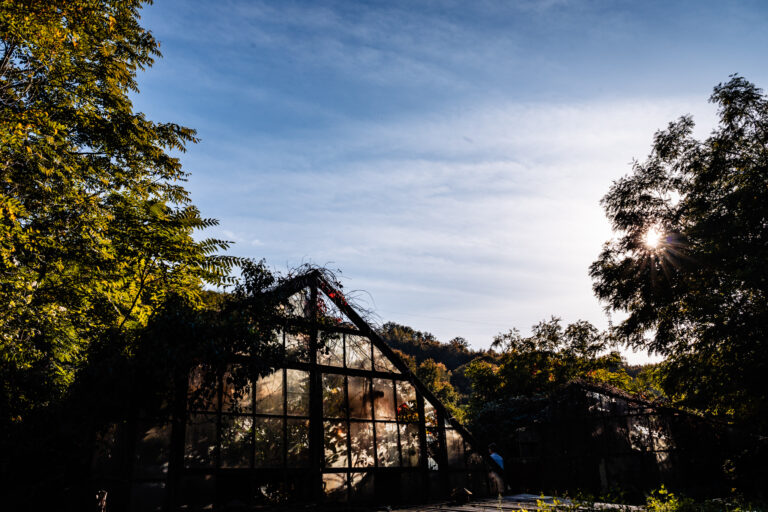
Eight glasshouses, built in stages between the 1930s and 1970s, where palm trees, cacti, flowers and exotic vegetables once grew — not for the townspeople, but exclusively for the leadership of the Reșița Machinery Construction Factory (MCF) and their official guests. An oasis for the privileged, hidden from the rest of the city.
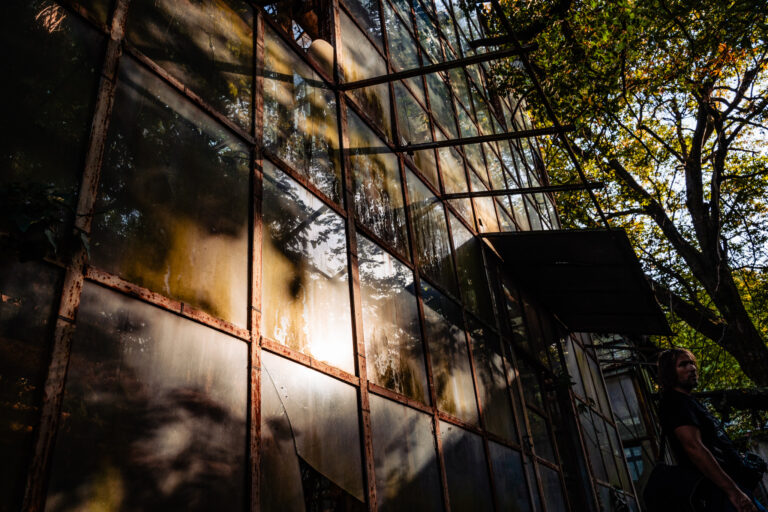
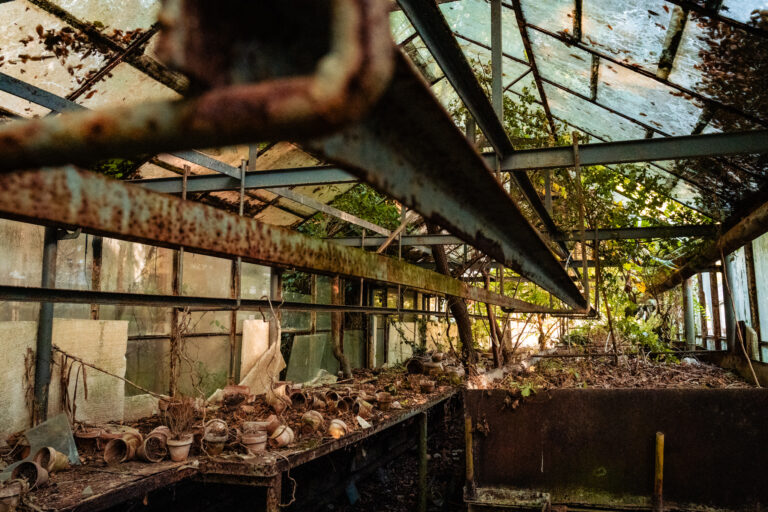
Today, those glasshouses stand abandoned. Vegetation has taken over the metal and glass structures, scattered with clay pots, dried palms and cacti, and rooftops pierced by young trees. And yet, the place is extraordinary. Full of character and full of possibility.
A moment that will not come again
In 2025, MCF Reșița was declared bankrupt, marking the formal end of an industrial history spanning more than two and a half centuries. Its performing assets — hydroelectric equipment production — had already been acquired by Hidroelectrica. The remainder of its oldest platform on the left bank of the Bârzava, a remarkable ensemble of warehouses, administrative buildings and glasshouses, entered liquidation and is being sold off piece by piece. This is where we came in.
The Municipality of Reșița has already acquired two protocol villas listed as heritage monuments, a bunker, the artefact-rich MCF Museum, and the Computing Centre — all immediately adjacent to the glasshouses. The shared vision is this: the regeneration of the entire site as a new mixed-use neighbourhood at the heart of the old industrial city.
In December 2025, together with the Banat Mountains Community Foundation, we successfully bid for the glasshouses and signed the purchase contract, with payment in instalments through to the end of 2026.
This is a bold, unprecedented move: a civic group reclaiming a piece 0.003% of Reșița’s disused industrial heritage. By the community and for the community.
Why this matters: Looking beyond Reșița
Reșița is not a singular case. It is one of the clearest examples in a long line of post-industrial towns across Romania and Central Europe: Communities built around a single industry, that lived through it for generations, now facing a void of jobs, of purpose, of shared spaces, of trust in the future. The question that hangs over Reșița is the same hanging over Hunedoara, Prahova, the Jiu Valley, or Bucharest, as well as over a dozen other places:
Who takes responsibility for what has been left behind? |
The answer usually ranges from private developers, scrap metal recovery companies, or the state, but rarely the community. The revitalisation of the Factory Glasshouses is our attempt to prove that the community can take over, that the civil society can become owners and stewards of built heritage; That physical space, carefully maintained and accessible to all, can rebuild trust, foster relationships between people, offer a place where different generations meet and do things together.
We live in an increasingly fragmented society with a critical shortage of third places: gardens, glasshouses, parks cared for in common are social infrastructure. All in all, critical civic infrastructure.
A success here would mean something beyond Reșița; it would be proof that NGOs and community foundations can go beyond grant-making and become stewards of land and heritage. That the industrial legacy built by the labour of past generations can be reclaimed by the people who inherited it.
The vision for the place
We envision the Factory Glasshouses, 20 to 25 years from now, as an animated and beloved space, woven into the daily life of Reșița residents of all ages, and a landmark for visitors. We see it buzzing with life, with well-tended gardens indoors and outdoors, community allotment plots, a micro-nursery, hands-on workshops for children and seniors, a café, a small library, a playground. A rest stop in the forest with an outdoor kitchen and camping space for hikers on the Via Transilvanica, whose trail passes just 150 metres away. A place to host creative residencies for artists and researchers, a space for shared knowledge and new encounters.
Within the broader MCF site, the glasshouses will offer something distinct from the historic villas or the future industrial museum: nature, breathing space, relaxation. The place where, after exploring the city’s industrial memory, you let your children discover how plants grow, and stop for a coffee.
Above all, we envision the glasshouses as a place where caring for something shared is practised day after day, almost like a ritual: A visible, ongoing exercise in collective ownership and responsibility.
The campaign: EUR 200,000 in 3 years
We are launching a private fundraising campaign targeting EUR 200,000 over three years, structured around two equal pillars.
PILLAR 1 — Completing the acquisition (2026) Purchase costs and legal commissions | EUR 100,000 |
PILLAR 2 — Urgent restoration & activations (2026–2028) Reconnecting utilities (water, electricity, sewage) Community workshops and small events | EUR 100,000 |
The critical deadline for Pillar 1 is 31 December 2026. Without full coverage of the acquisition costs, we risk losing the property.
But we are not waiting for the renovation to be done before opening the place. We are building community and visibility as we go. So here’s what’s happening this year:
- APRIL: International industrial heritage conference “Regenerating Places, Reimagining Futures”, hosted in Resita, with site visits to the UCMR platform and the glasshouses.
- JUNE: Satellite event of the European New European Bauhaus Festival, with visits and discussions about the future of the glasshouses.
- JULY- AUGUST: Second edition of the Resita Industrial Heritage School, a summer school for architects and urban planners who will co-design the future of the entire UCMR site.
- JULY- AUGUST: International volunteering camp at the glasshouses, with participants from Romania and abroad: clearance, first garden works, educational and cultural workshops.
You have to come and see the glasshouses with your own eyes. Maybe help us clear the first path or plant the first seedling. Together, we can turn this abandoned place into a place buzzing with life and hope.
>>> SCROLL DOWN TO SEE HOW YOU CAN CONTRIBUTE <<<
Be part of this
We are looking for partners — companies and individuals — who believe that physical shared spaces matter, that industrial heritage can belong to communities, and that models of civic ownership beyond profit are possible and relevant.
- Direct donation — tax-deductible under Romanian law on sponsorship.
- Corporate sponsorship — with visibility in project communications at local, national and international level.
- Impact loan — repayable from the site’s own revenues, to be discussed case by case.
Every contribution, whatever its size, is part of this construction.
Why trust us
Make Better Association has been working in Reșița since 2016, with a documented portfolio of urban regeneration and industrial heritage projects: the UCMR heritage inventory, the Reșița Virtual Museum platform, the Reșița 250 LAB network, projects dedicated to the Barzava hydrotechnical system, the limestone funicular, the last blast furnace. Since 2023, MKBT has coordinated the National Heritage Stewardship Support Programme, funded by the Romanian American Foundation, which supports NGOs across six ecotourism destinations in Romania. In 2026, MKBT marks its 10th year of engagement in Resita — and enters this decade as co-owner of the glasshouses.
The Banat Mountains Community Foundation raises over EUR 15,000 per year in local donations through its flagship community events: Community in Motion (Comunitate în Mișcare) and Running through the Forest (Alergând la Pădure). It has solid experience in local fundraising, mobilizing volunteers, and partnerships with schools, NGOs and local authorities across the region.
Together, we are a partnership with complementary expertise, a consolidated institutional relationship with the Municipality of Reșița, our neighbour and trusted partner in the site’s regeneration, and a national and international network of collaborators.
>>> Join us and follow us here <<<
Mentorii din program

Valya
Stergioti
Valya este expertă independentă în planificarea interpretării patrimoniului, precum și formator în acest domeniu. După opt ani în calitate de coordonatoare a direcției de formare la Interpret Europe, ea se concentrează acum pe co-crearea de experiențe de vizitare în Grecia, Balcani și nu numai. Viziunea ei este de a transforma patrimoniul cultural și natural într-o sursă dinamică de învățare, identitate comunitară și dezvoltare durabilă.

Jan
Kroupa
Jan are peste 20 de ani de experiență ca speaker internațional, trainer, consultant, coach și cercetător în filantropie, mobilizarea resurselor și leadership în societatea civilă. A fondat Centrul Ceh de Strângere de Fonduri, o organizație non-profit de consolidare a capacităților din Europa Centrală și de Est. În cadrul programului, Jan va sprijini organizațiile care vor dori să articuleze strategii de fundraising pe termen lung
Echipa de proiect

Ana, MKBT
Este coordonatoarea Deschis!. Ana are pregătire în planificare strategică și politici publice și a fost în centrul mai multor proiecte care au adus împreună oameni, instituții și inițiative care altfel probabil nu s-ar fi așezat la aceeași masă, pe teme ce țin de locuire, aproprierea orașelor și spațiilor abandonate, reziliență și co-guvernanță urbană.

Marina, MKBT
Are experiență de 13 ani în planificare strategică participativă, lucrând la firul ierbii cu precădere în comunități mic urbane și rurale, atât din România cât și din alte state din Estul Europei. În programul Deschis!, Marina va facilita procese de creionare de viziuni de revitalizare, angajarea comunității și planificare strategică.
Maria, MKBT
Coordonează componenta de comunicare în programul Deschis! și organizarea comunității de învățare Latent/Emergent. Maria are peste 10 ani de experiență în comunicare în mediul privat și ONG și face un master în educație pentru dezvoltare durabilă.

Sonia, Synerb
Co-Fondator & Co-CEO al Synerb, Sonia este expert financiar și de sustenabilitate, fiind un mentor activ pe diverse arii operaționale. În Deschis!, Sonia va lucra 1-la-1 cu organizațiile selectate la dezvoltarea unor idei și planificarea unor activități de generare de venituri.