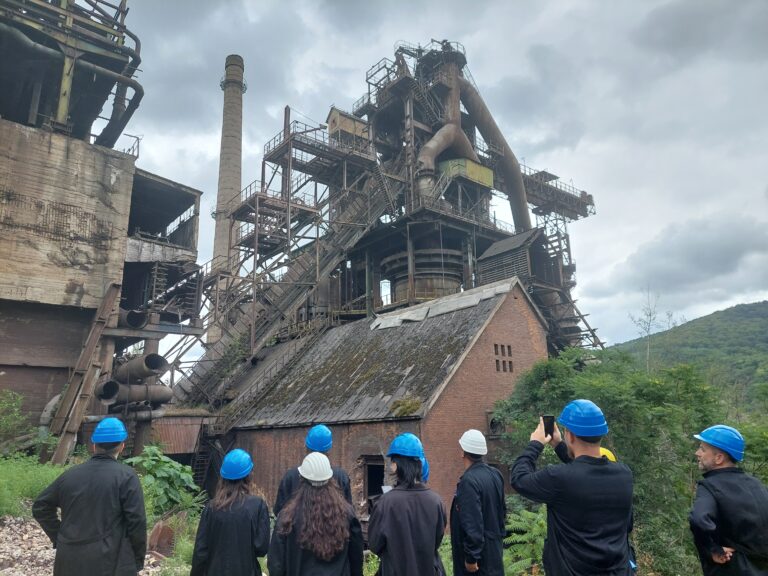
In the heart of Reșița, the last blast furnace reopened for a few days, not to cast iron, but to forge ideas. Young professionals from across the country gathered in Reșița for the Industrial Heritage Lab Summer School, ready to imagine and sketch what a true awakening of the furnace could mean.
Between July 26 and August 3, 2025, Reșița hosted the first edition of the “Reșița Industrial Heritage Lab” Summer School, an interdisciplinary program dedicated to exploring and reimagining the city’s industrial heritage, with a spotlight on the Blast Furnace No. 2, a historic monument of national significance. The workshop was coordinated by MKBT: Make Better alongside the Nonformal Spatial Planning Workshop, and formed part of the project “We Stand Together Around the Last Furnace”, implemented in partnership with the Municipality of Reșița and supported by the Romanian Order of Architects (through the architecture stamp) and The King’s Foundation. The workshop also took place under the aegis of Reșița 250 Lab, the urban innovation laboratory launched by MKBT in 2023 as an ecosystem for cross-sector and cross-institutional collaboration aimed at urban regeneration.
An Interdisciplinary Laboratory for Heritage
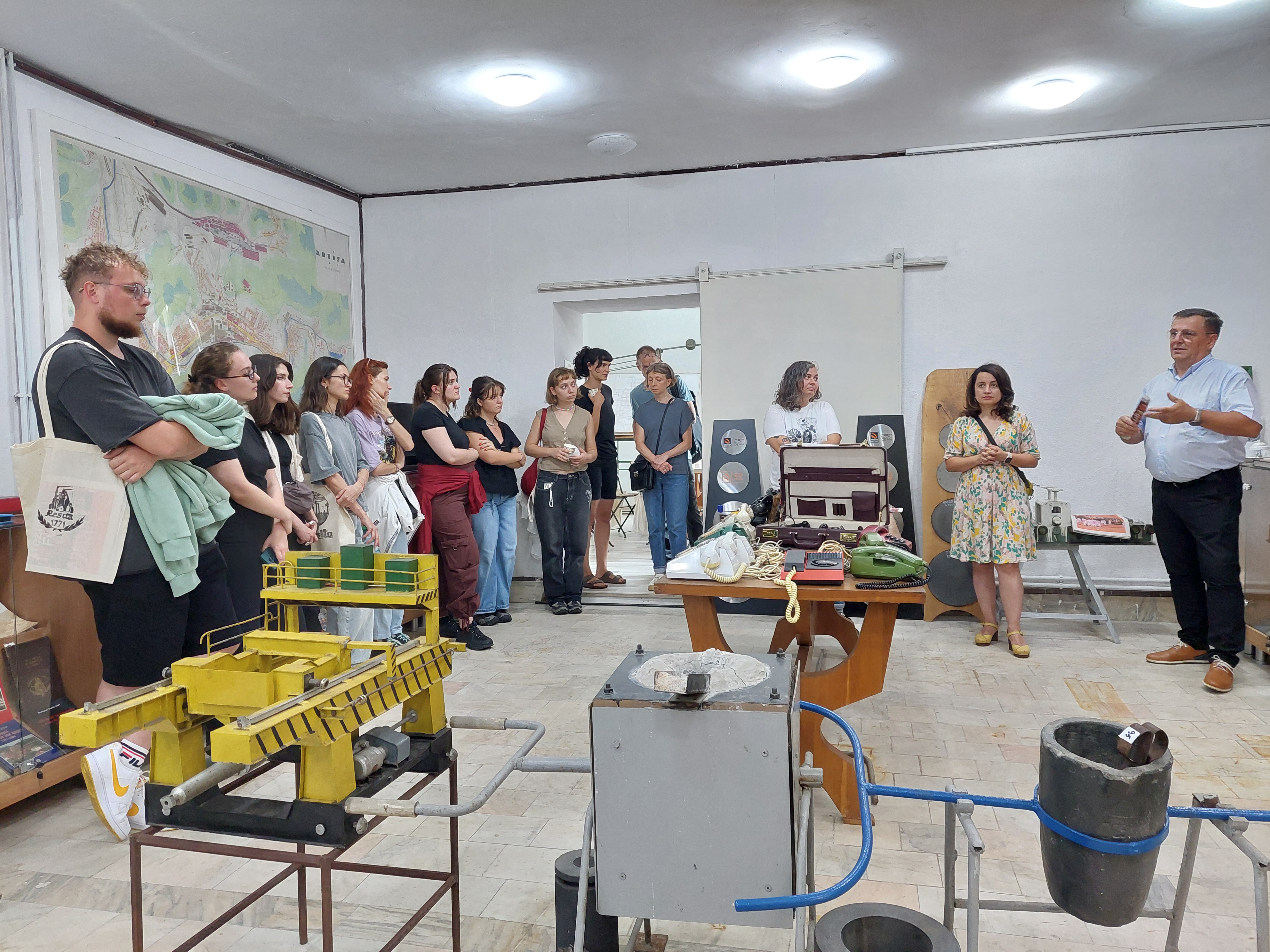
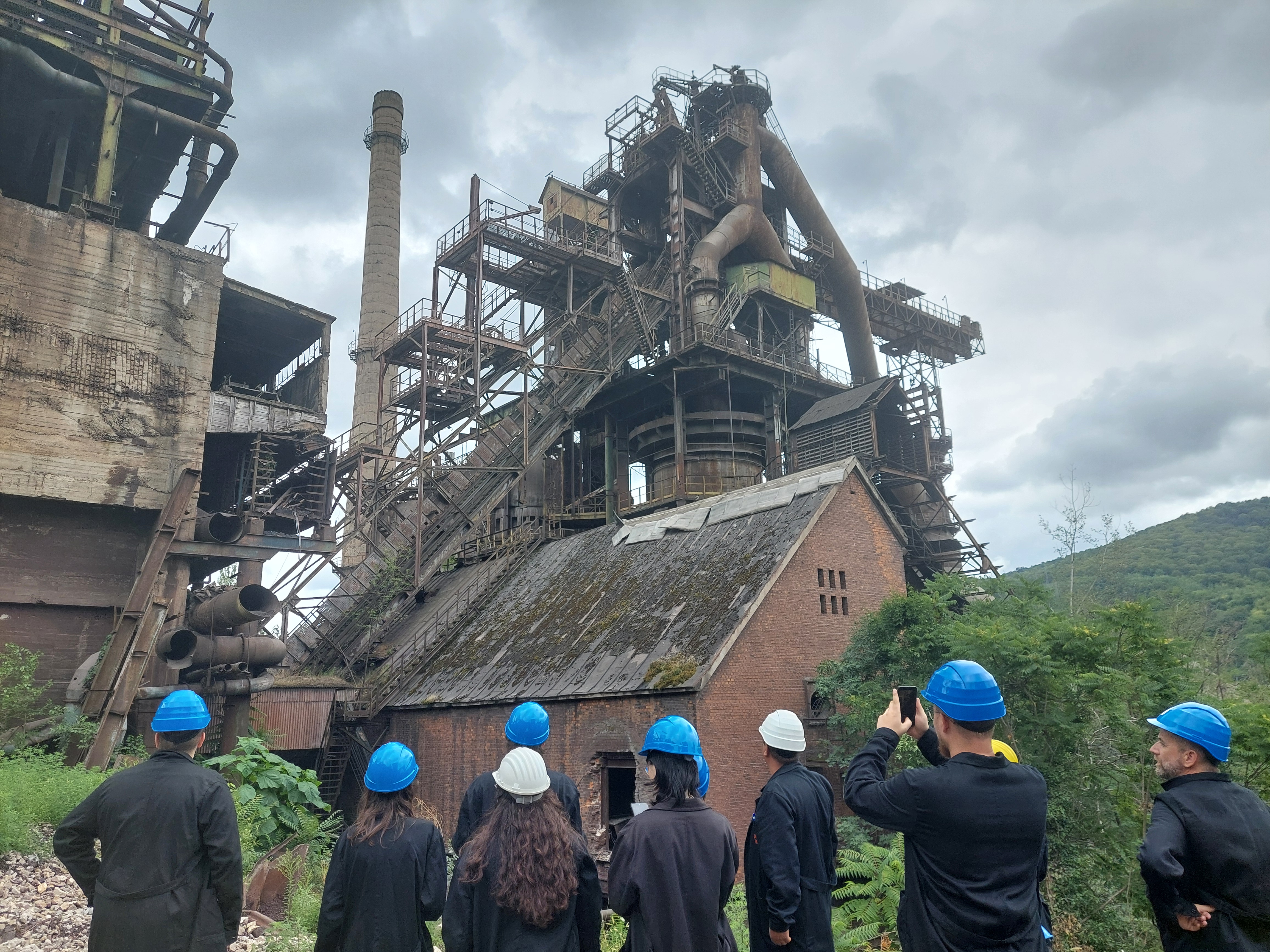
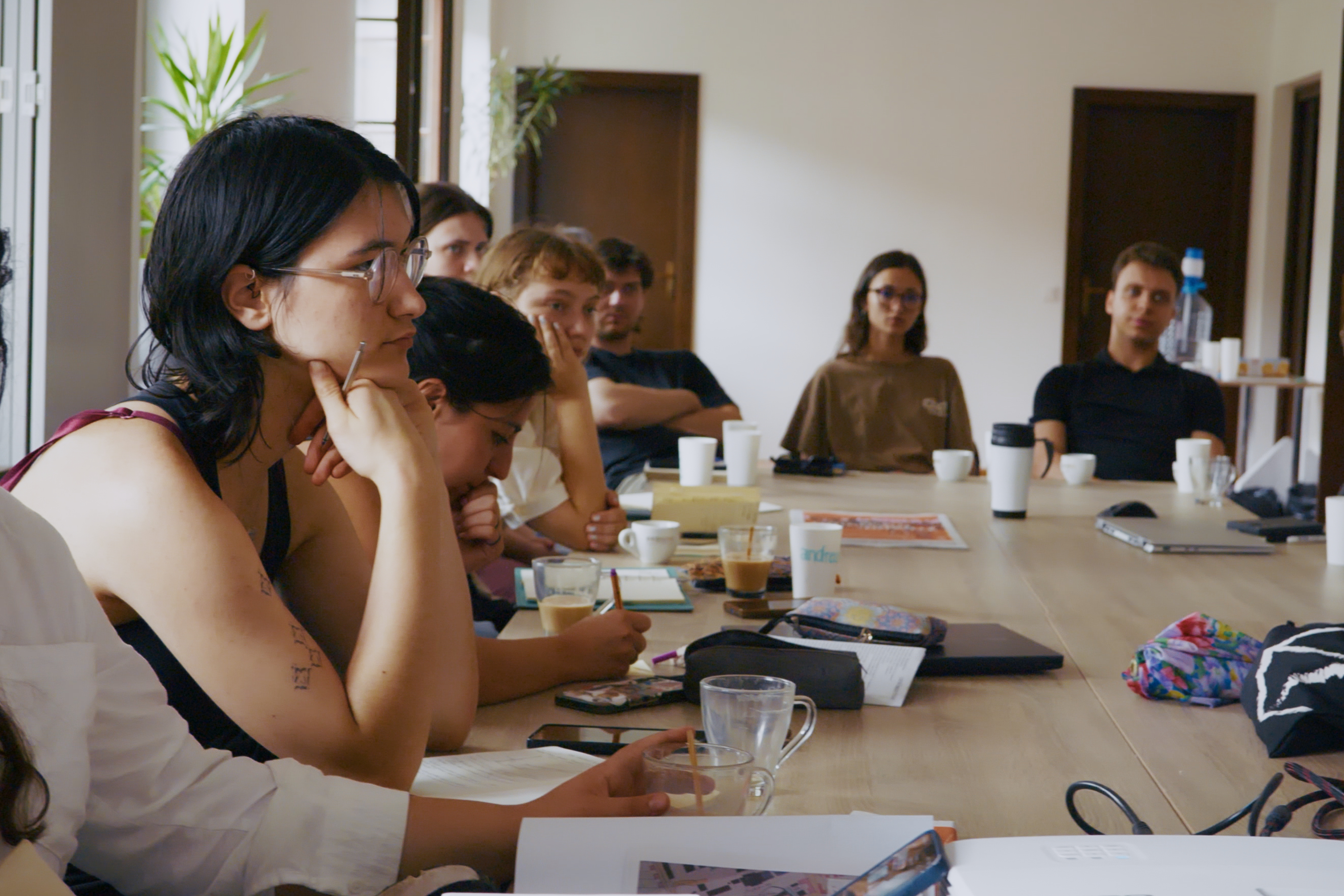
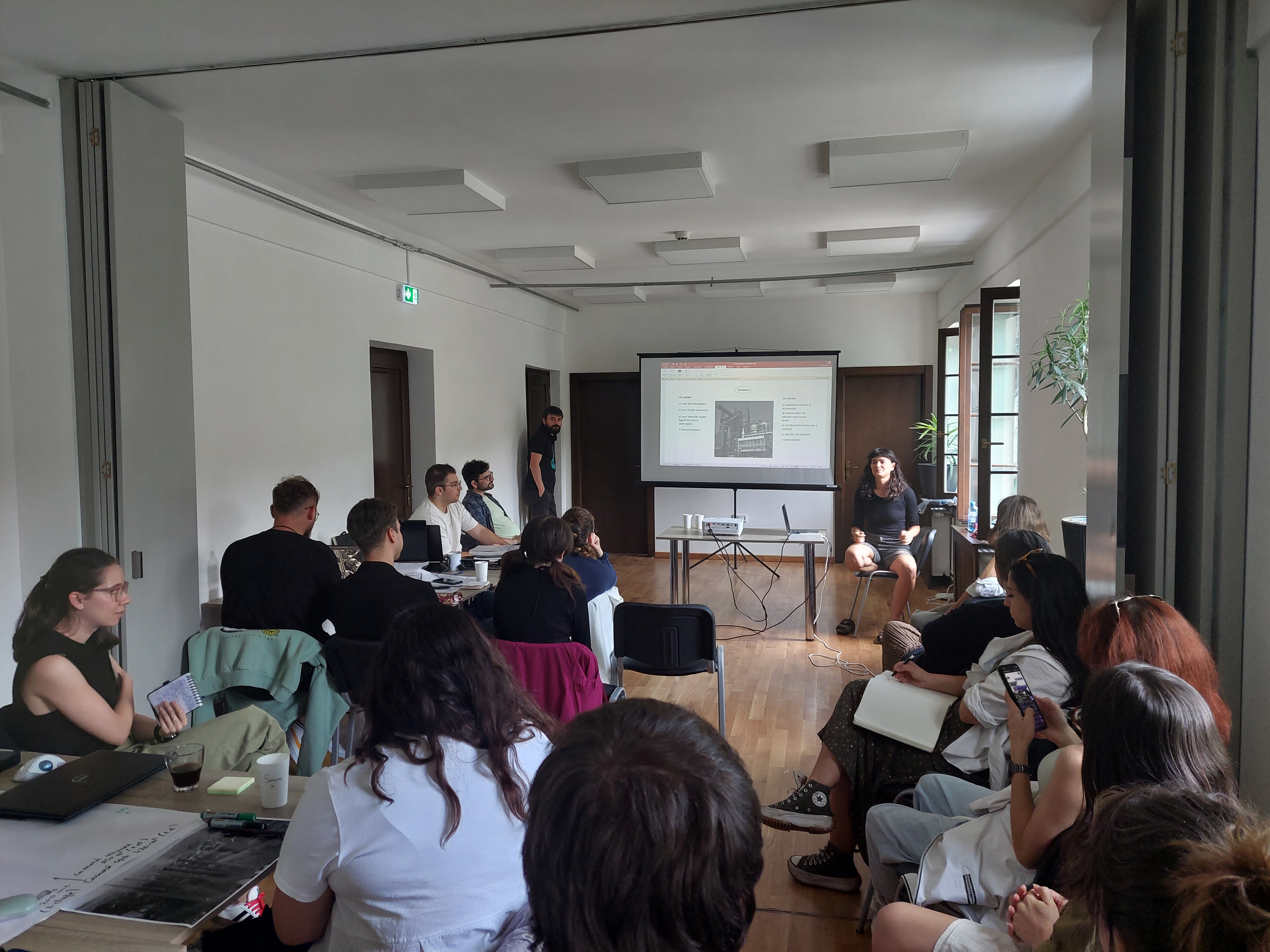
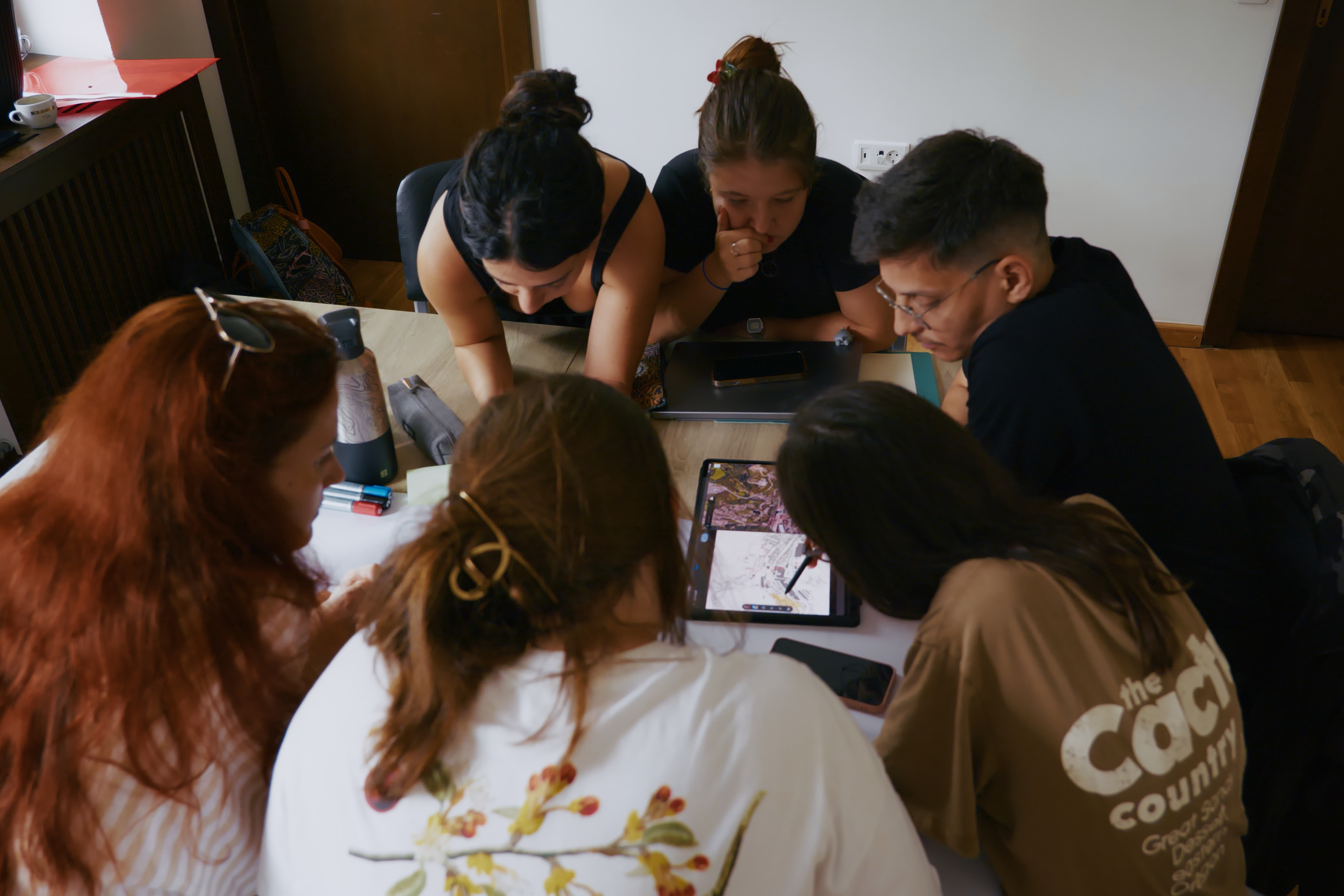
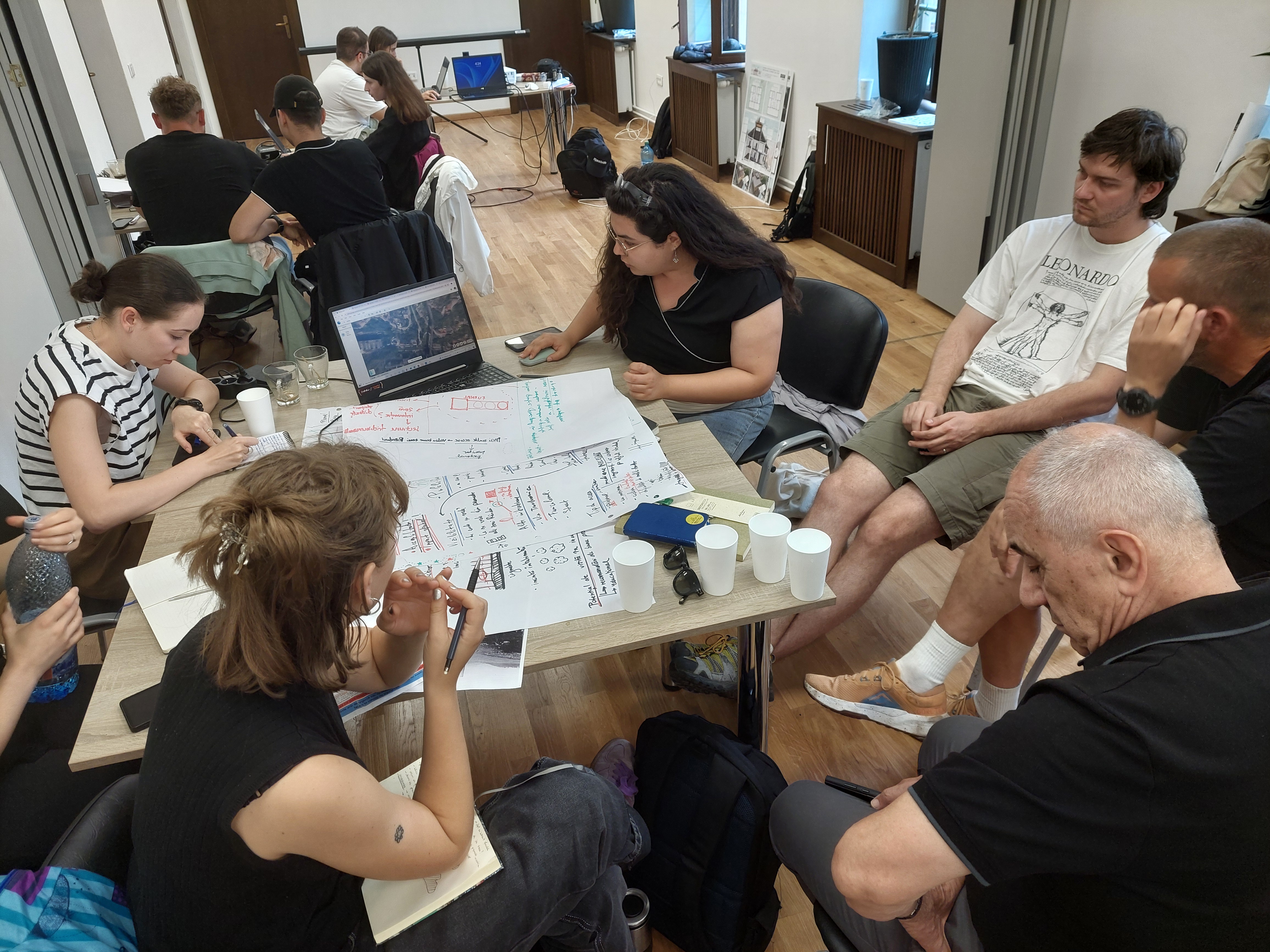
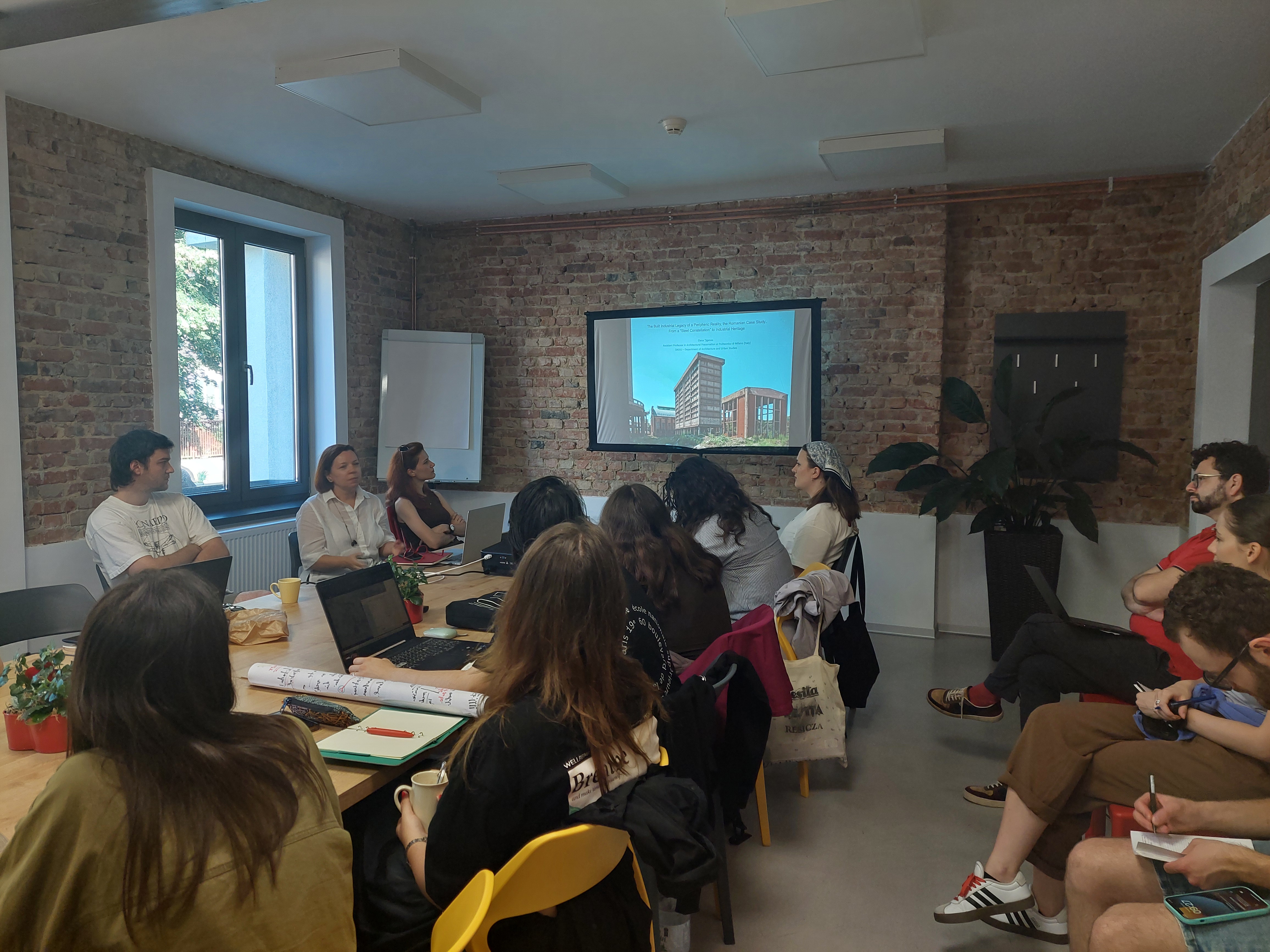
Over the span of eight days, 20 participants—students, master’s candidates, doctoral researchers, and early-career professionals in architecture, urbanism, restoration, and territorial planning—imagined and reimagined scenarios for the adaptive reuse of Blast Furnace No. 2. Through a dynamic combination of lectures, field visits, discussions with experts and residents, guided tours inside the still-active Artrom Steel Tubes industrial complex, and meetings with local authorities, the participants explored an approach that regards industrial heritage as a living asset—a shared good that fosters local pride and creates opportunities for the community.
Guided by a team of mentors and guest lecturers from three university centers across Romania and several international institutions, including architects, researchers, and specialists in heritage, urbanism, local economics, and anthropology, participants analyzed the site at three scales of intervention: from the furnace’s relationship with the city (macro scale), to the industrial precinct (mezzo), and the structure itself (micro). They proposed solutions for reconnecting the furnace to the city and to the daily lives of its inhabitants.
To What End a Summer School Dedicated to the Furnace?
The choice of Blast Furnace No. 2 as the focus of the first edition of the “Reșița Industrial Heritage Lab” Summer School was anything but random. In 2023, the Municipality of Reșița began discussions with the furnace’s owner, Artrom Steel Tubes, expressing its interest in exploring scenarios for preserving and valorizing the site. The owner responded with openness, on the condition that any proposed revitalization would not interfere with the ongoing economic activity on the premises. This tension—this creative challenge—became the starting point of the summer school, and our motivation as project initiators was to support the municipality in identifying and bringing such scenarios to the table.
Secondly, the furnace is Reșița’s most imposing industrial heritage landmark and a true symbol of the city’s more than 250 years of steelmaking history. For the participants, working on this site offered a rare opportunity to engage with an authentic, complex, and meaning-rich structure—to learn by doing, to formulate questions with real stakes, and to develop adaptive-reuse scenarios that could later on inform the local planning process. Thirdly, choosing the furnace aligned with the strategic vision of the Reșița 250 Lab: bringing together academia, the public sector, civil society, and private industry in a shared, cross-sector effort toward urban revitalization through heritage.
Thus, the summer school was not merely an academic exercise, but an applied endeavor—born from a real need and transformed into a platform for dialogue and co-creation, advancing the principle of civic stewardship: shared responsibility, through civic engagement, for the city’s industrial legacy.
Methodology, Resources, and Tools
Beyond theoretical analysis, the process was built on a rigorous methodology and the use of current documentation and design tools, aimed at substantiating viable and relevant proposals for the furnace’s future. To support the workflow, organizers provided participants with a comprehensive set of documentary and technical resources:
- Technical documentation from the Artrom Steel Tubes archive, capturing the furnace’s evolution over time, and a dedicated tour of the Artrom Steel Tubes platform, guided by the plant’s management team, to deepen detailed understanding of the site as a whole, as well as the furnace as a location and set of challenges;
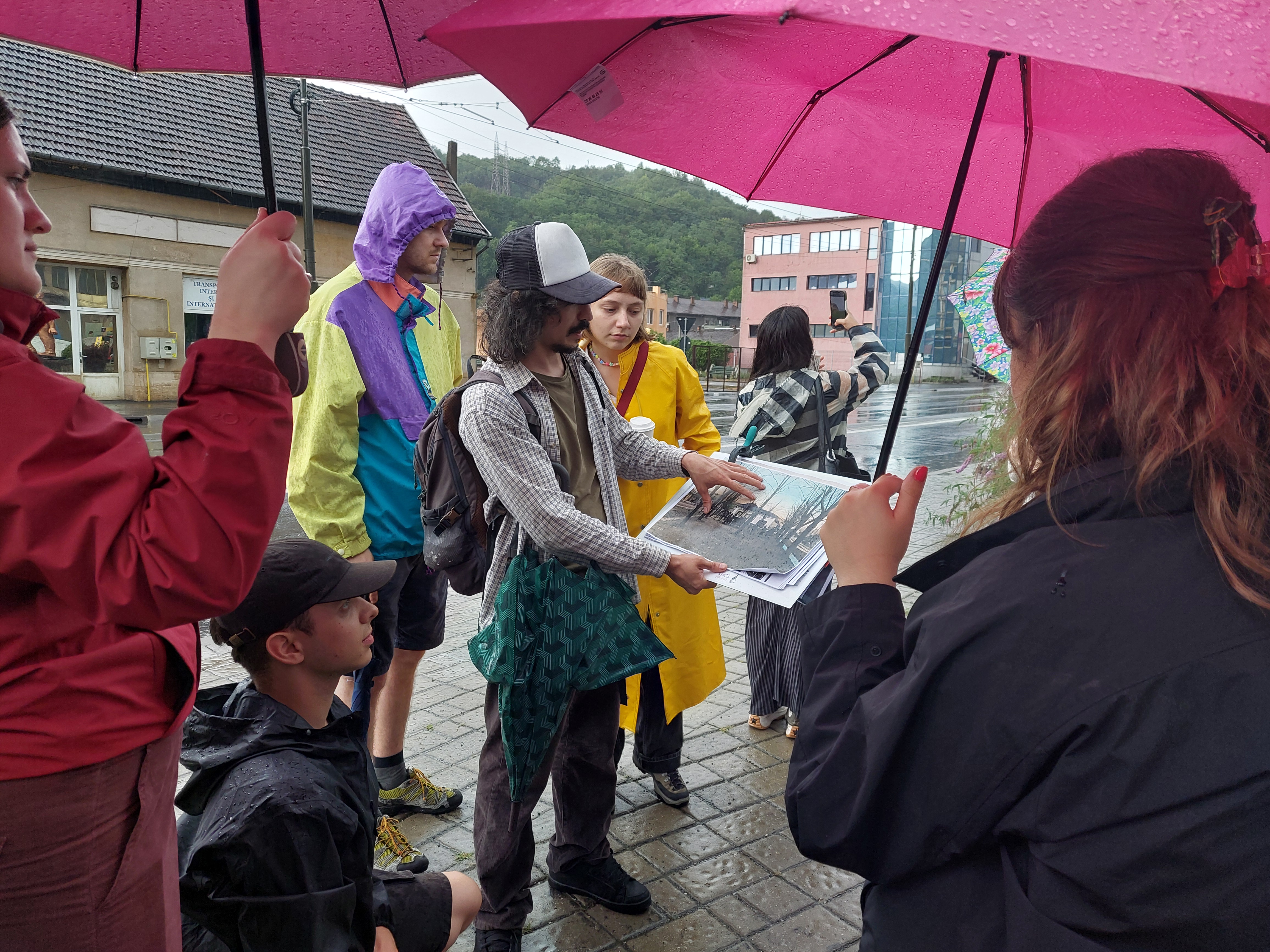
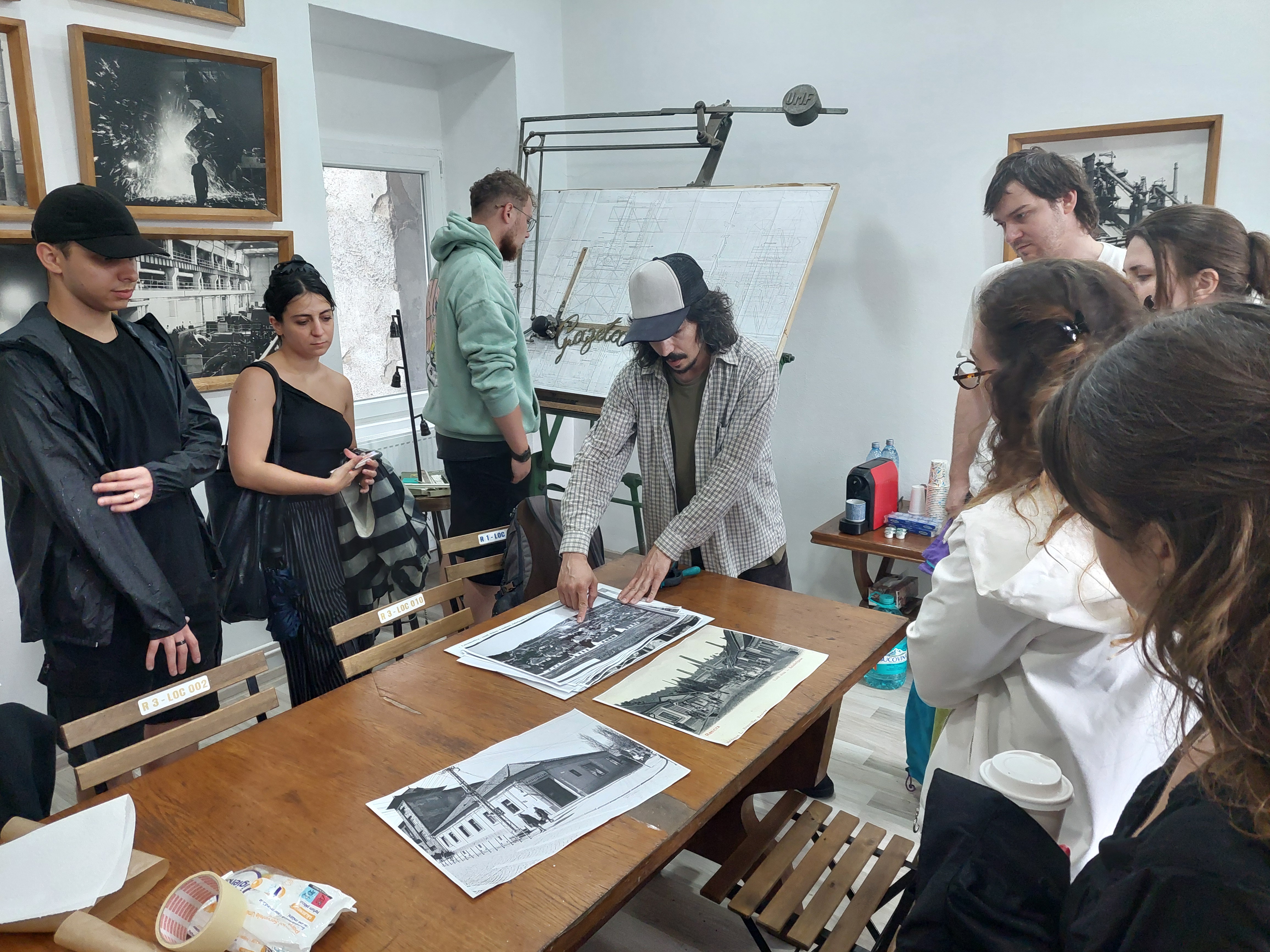
- Historical photographs and maps, along with a guided tour of the furnace area and industrial Reșița, offered by Andrei Bălbărău from the Amateur Filmmaker Museum, to facilitate a thorough understanding of the spatial, historical, and social context of the furnace’s development, as well as its relationship with other industrial heritage sites in the city;
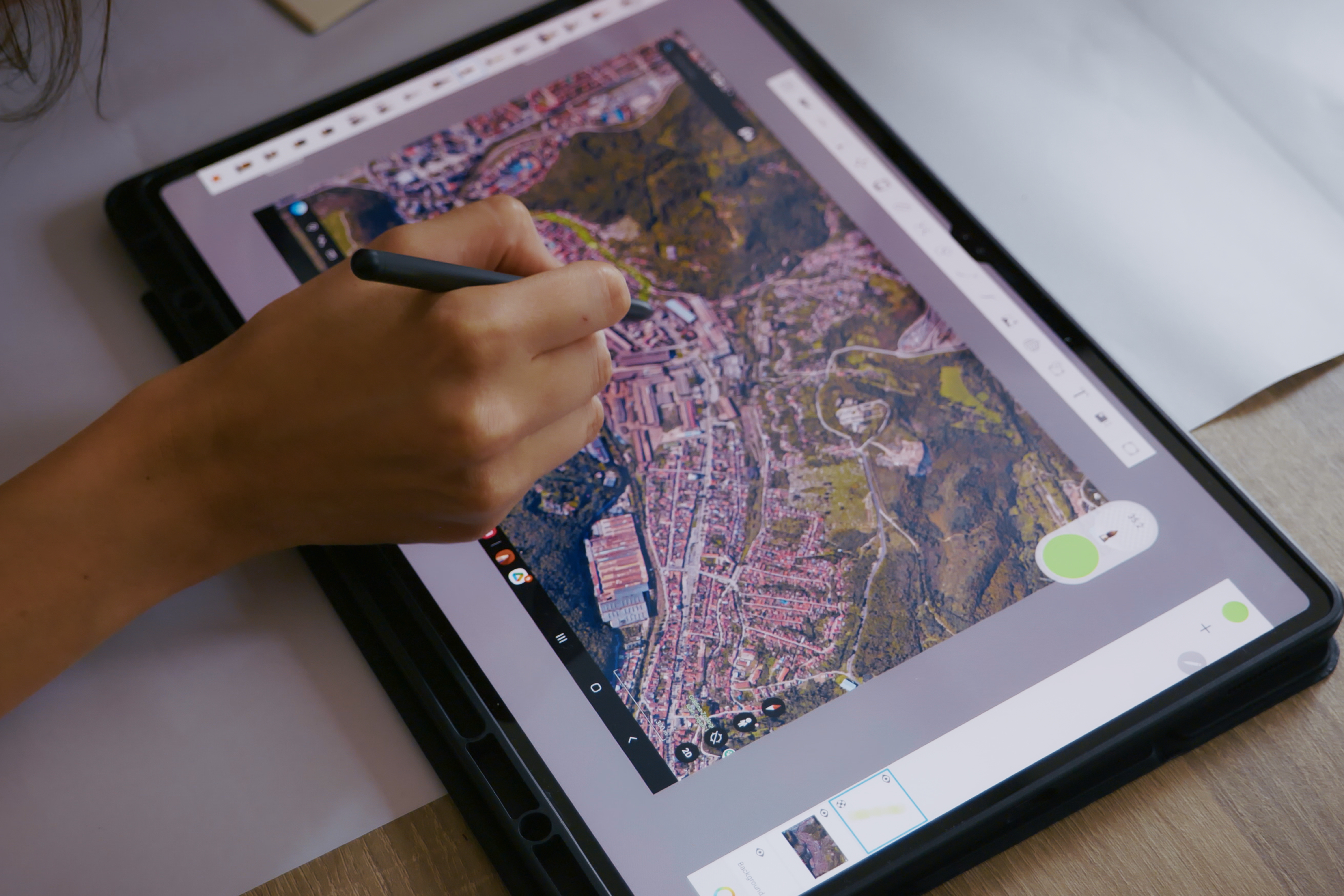
- A high-precision 3D scan, resulting in a 3D mesh that enabled detailed structural analysis on which students worked directly to graphically illustrate their proposals. The mesh was created through photogrammetry by a team of geodetic engineers from Xplorate Group. Students also benefited from a course delivered by engineer Adrian Trifan, coordinator of Xplorate Group, on 3D scanning technologies and their applicability in architectural design. By integrating these digital tools into the educational process, the summer school contributed to promoting an interdisciplinary approach that combines research and technological innovation, thereby advancing practice in the field of industrial heritage revitalization;
- Aerial photographs and drone surveys, useful for visibility studies and integration into the urban landscape;
- A historical and cultural study authored by architect Maja Băldea and architect Gabriela Domokos-Pașcu, which contextualized the furnace’s role in Reșița’s industrial history.
Three teams, three perspectives on the reuse of the furnace
The three teams formed offered complementary interpretations of the same landmark:
- “Be a Tourist in Your Own City” – an invitation to Reșița residents to rediscover their heritage through an urban route that connects the furnace to the city center via footbridges, platforms, and cultural spaces.
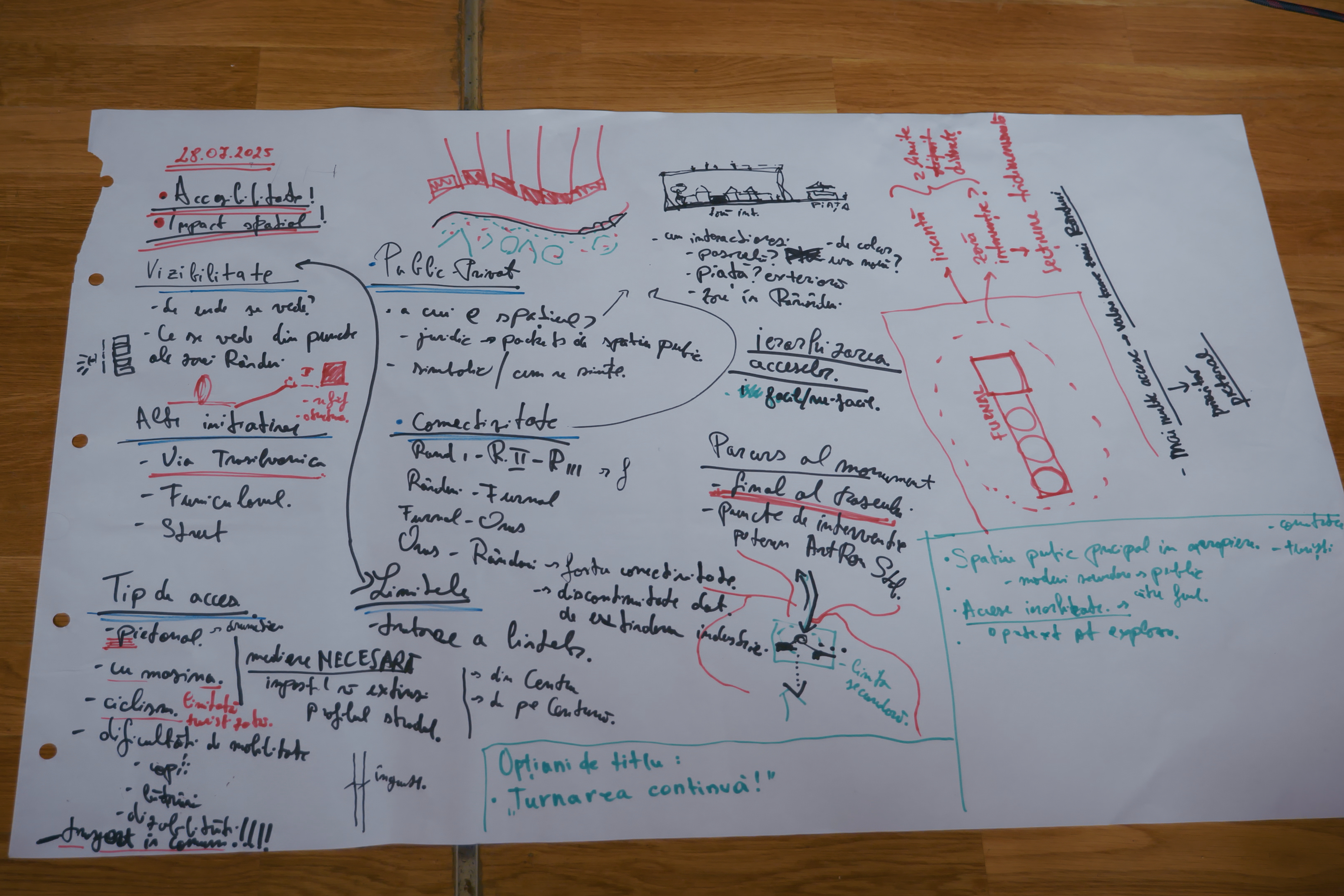
- “Continuous Casting” – a metaphor for continuity, proposing the transformation of the furnace into a hub of urban and community connections through thematic tours and adaptive spaces.
- “The Red Thread of the Furnace” – a concept that unifies the city and the industrial site through a symbolic, visual, and physical route, linking heritage to the alternative mobility network.
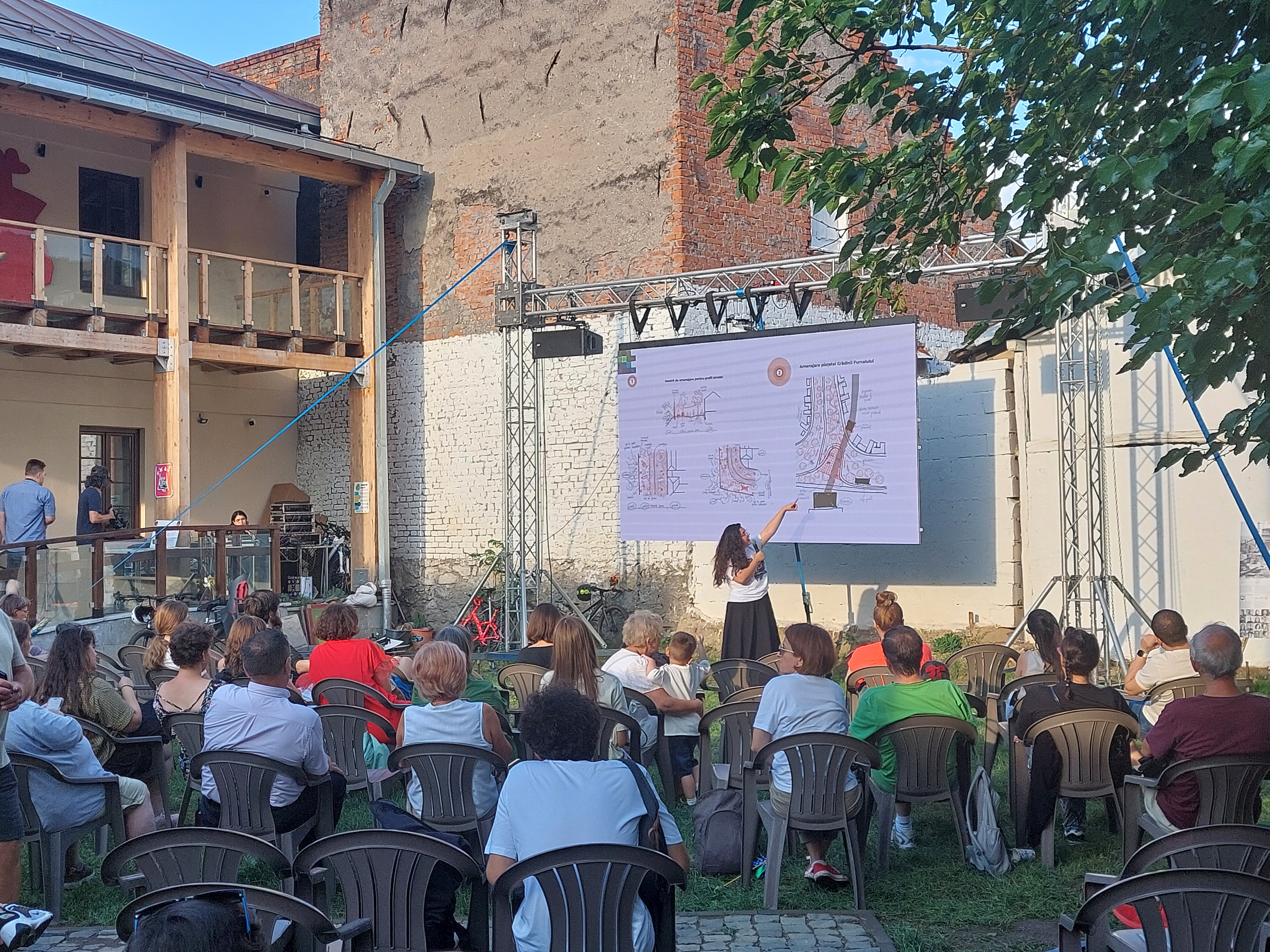
The outcomes, nine synthetic boards and visual proposals, were publicly exhibited at the Street Delivery Reșița event, in the exhibition “Awakening the Furnace!”, offering the community an opportunity to explore ideas and imagine the future of this urban symbol. These materials do not represent final projects, but rather visual and conceptual tools that can guide future planning and design processes, functioning as an atlas of possible scenarios for the adaptive reuse of the furnace.
You can browse the summer school brochure, which includes all nine synthetic boards, here.
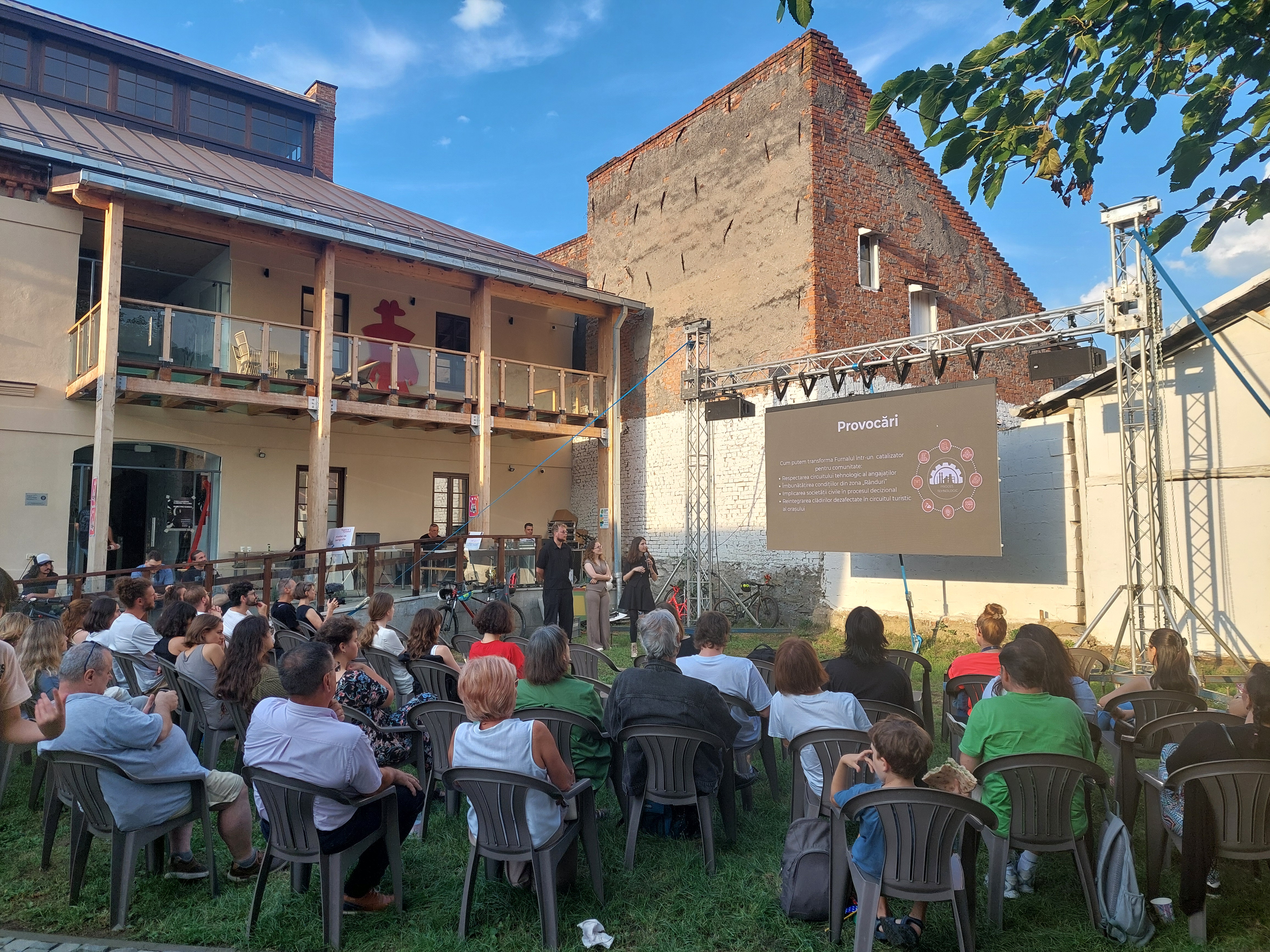
Industrial Heritage as a Driver of Urban Regeneration
The summer school demonstrated that the revitalization of industrial heritage can emerge from a genuine co-creation process—one in which specialists, local authorities, and the community work together to transform a historical landmark into a living, integrated, and meaningful space for the contemporary city. For the participants, the experience was both formative and inspiring: direct engagement with an authentic heritage site, coupled with the opportunity to practice interdisciplinary collaboration and strategic planning in real-world conditions. Young professionals described the summer school as “a place where theory becomes direct experience” and “an example of collaboration between community, administration, and industry for heritage protection.”
“Everything that university studies fail to capture about industrial heritage: a humanistic, living, and applied perspective that transforms theory into direct experience.” – summer school participant
“For me, this summer school was an eye-opening experience; I learned things I didn’t expect to discuss and had expectations fulfilled that I didn’t even know I should have had.” – summer school participant
“The most memorable moments for me were the site visits with Andrei, or really any connection made between the structure itself and the community around it.” – summer school participant
A Step Forward for Reșița and for Reșița 250 Lab
Through the “Reșița Industrial Heritage Lab” Summer School, Reșița becomes an example of a city rediscovering its industrial identity and transforming it into an engine for sustainable urban development.
“The ‘Reșița Industrial Heritage Lab’ Summer School represented, for the Nonformal Workshop team, an opportunity to apply the methodological principles that guide our work (co-creation | multi-scale approach | interdisciplinarity) to an industrial heritage landmark of national value. As mentors and tutors, my colleagues and I focused on developing critical and collaborative thinking among participants, encouraging them to discover (and refine) their skills in strategic planning. Above all, we were impressed by the attention participants devoted to the subject, the depth with which they understood the context, and the ingenuity they demonstrated in outlining scenarios for transforming the Furnace into a catalyst for urban regeneration.” – Ștefana Bădescu, Nonformal Planning Workshop
MKBT, together with ANF and local partners, aims to continue these types of initiatives in future editions of the laboratory, offering a framework for learning and collaboration for professionals who believe in cities that regenerate through heritage.
You can read more about the laboratory’s initiatives at www.muzeulvirtualresita.ro