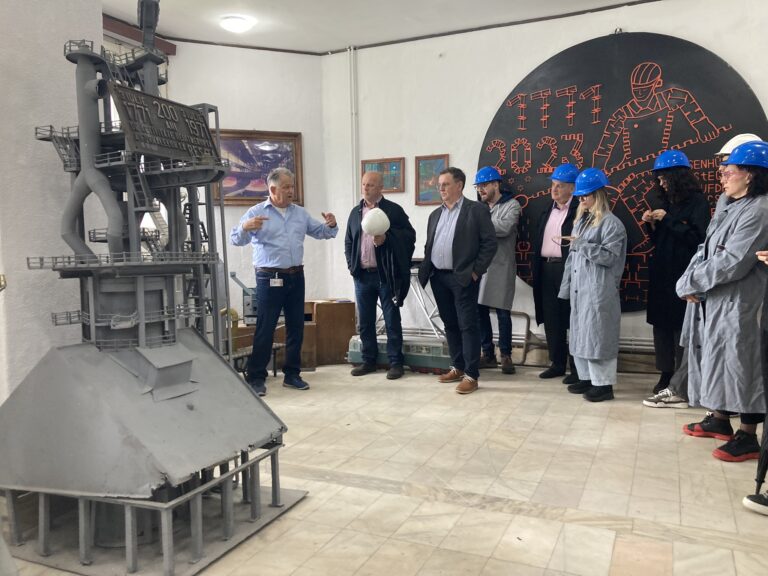
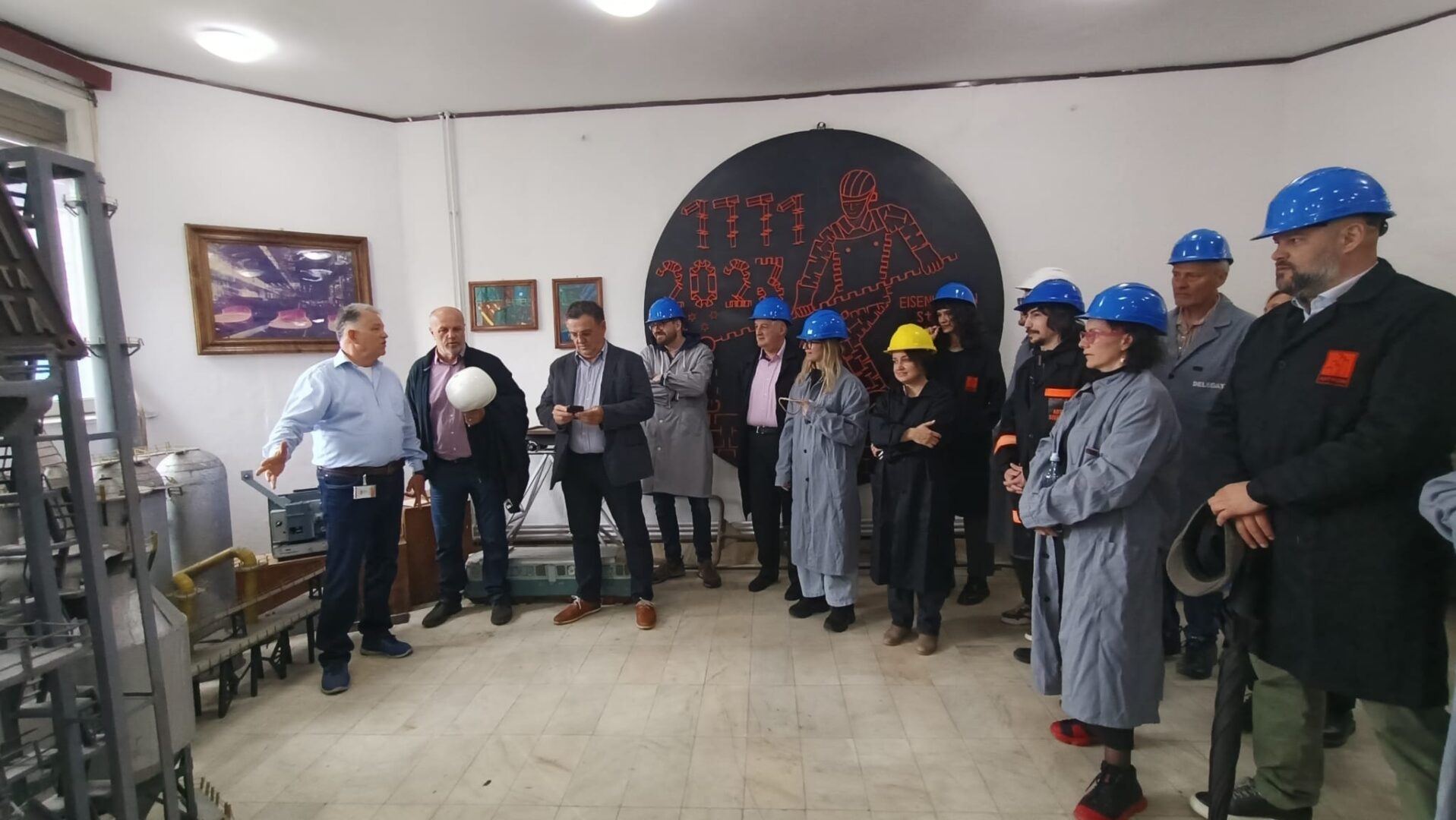
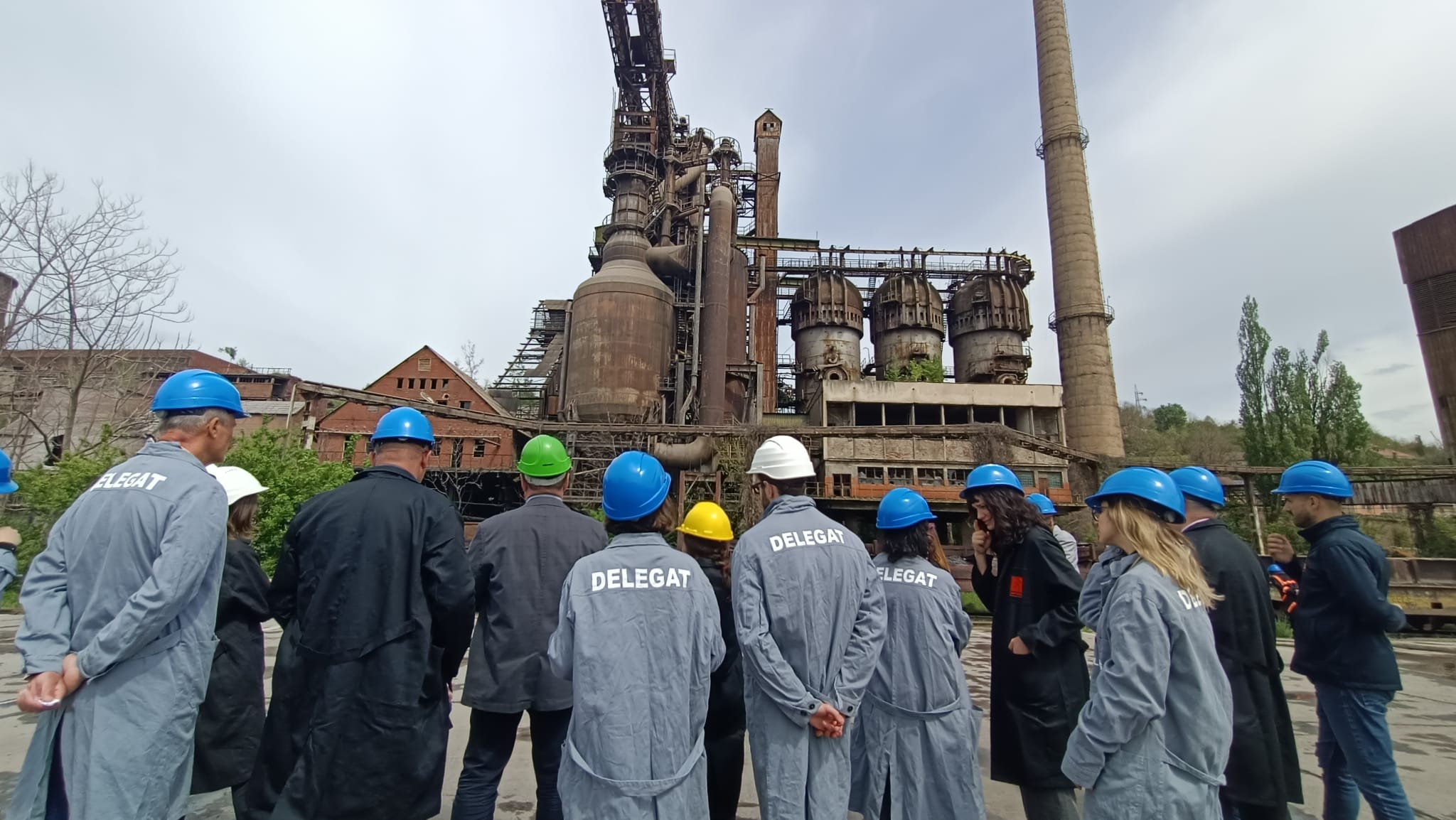
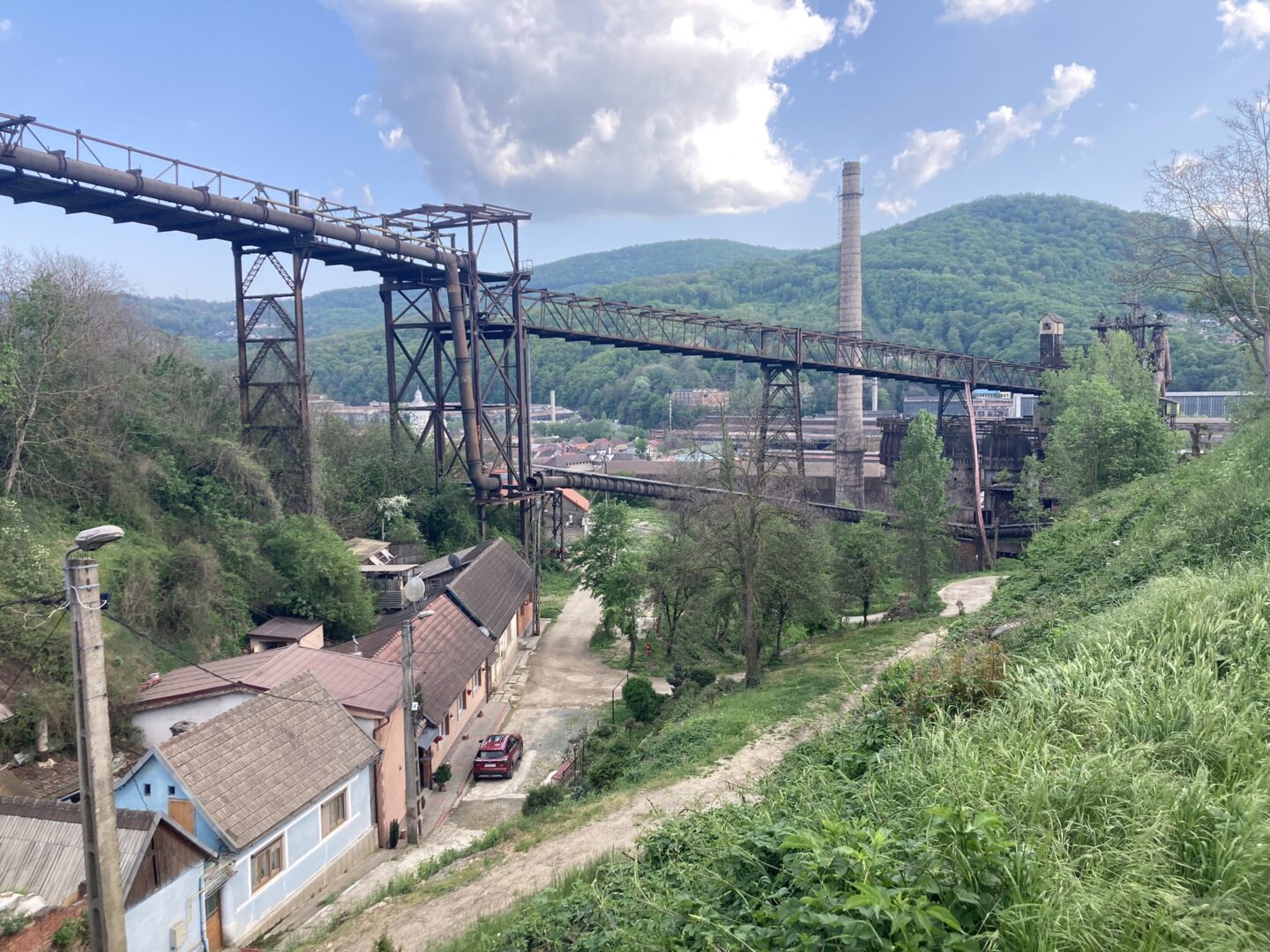
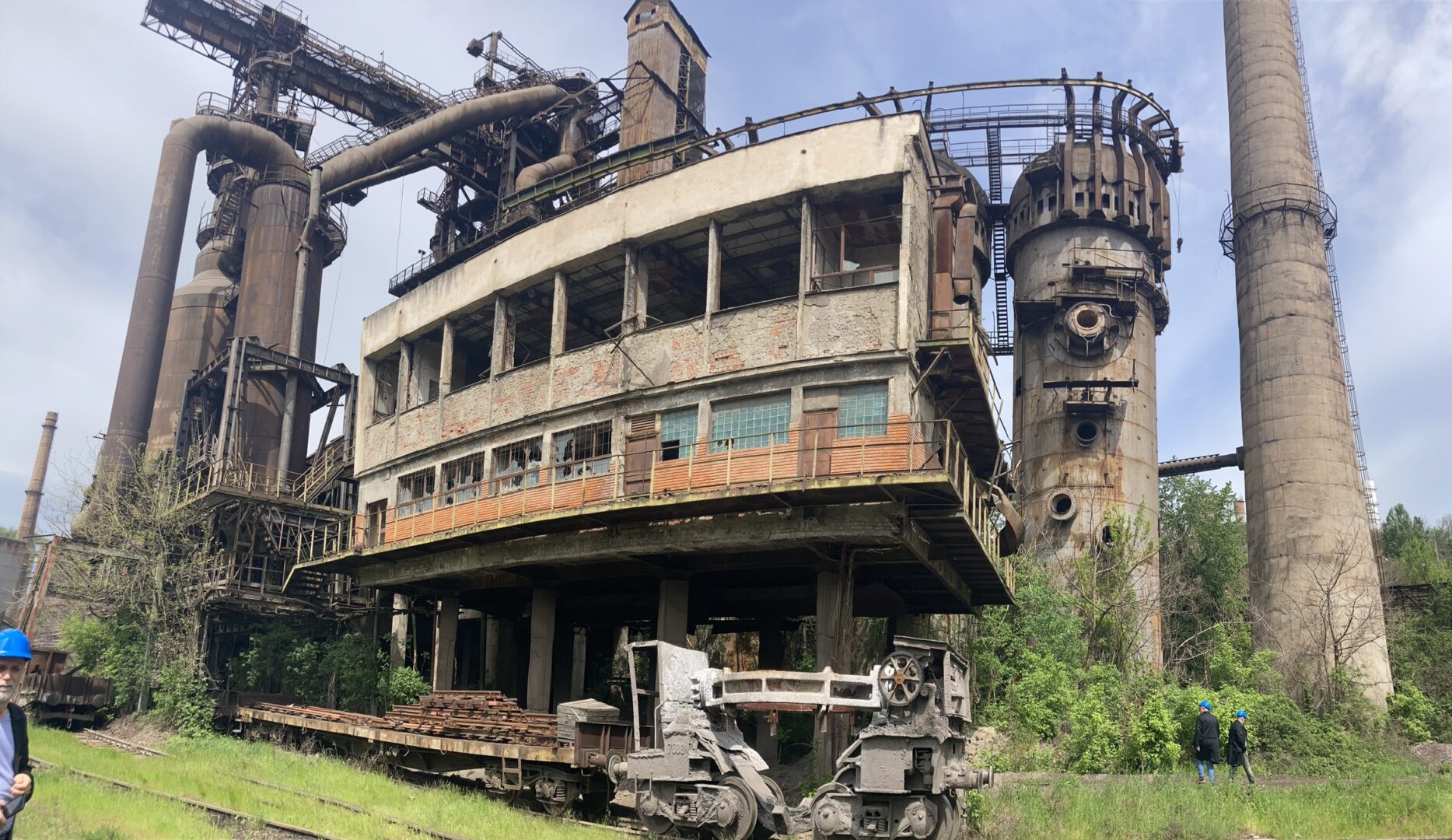
At the end of April, we organized the first exploratory visit to the blast furnace—part of the industrial site formerly belonging to the Reșița Steel Plant (now owned by Artrom Steel Tubes)—as a first step in a broader initiative aimed at 1) promoting the industrial heritage value of the furnace and 2) encouraging a community-wide and institutional debate about its preservation and potential opening to the public. More details about the initiative: >>> HERE.
Each visit to Reșița feels different. Although our core team travels there several times a year, we see the city anew each time—through the eyes of the people who join us, each bringing their own personal, professional, and methodological perspectives. On this occasion, we were accompanied by members of the oral history group: five journalists, storytellers, and anthropologists documenting the city’s transformations and ongoing evolution, as well as its industrial work culture and everyday life in the 1960s and 1970s—as lived and remembered by the people of Reșița, shaped by their own emotions and prespectives. More details about the “crew” and our goals: >>> HERE (RO only)
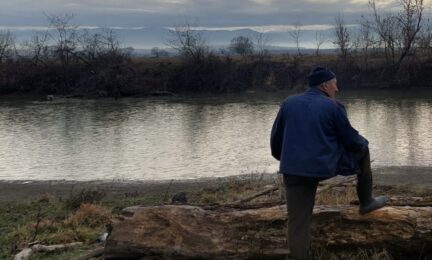
“’Reșița has already told its own stories.’, a local literary critic told us over coffee. She meant that much of what once was—what people lived through, what the blast furnace meant—has already been told, in history, poetry, and prose. But that storytelling either stopped decades ago, or the public is no longer paying attention. A teacher with a passion for mountain hiking joked recently that the definition of a specialist is someone who comes from outside to help you see things with fresh eyes. In that sense, this is the ‘expertise’ we bring as outsiders: fresh ears for listening, fresh eyes for seeing, and, we hope, new ideas for carrying the story forward. ‘You had to come to Reșița for me to finally visit the blast furnace,’ a local chemistry teacher told us.” (Excerpt from Cristi Lupșa’s text, written during the first visit to the blast furnace site with the oral history group.)
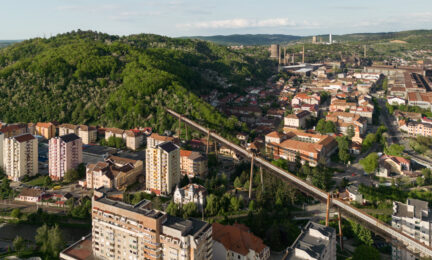
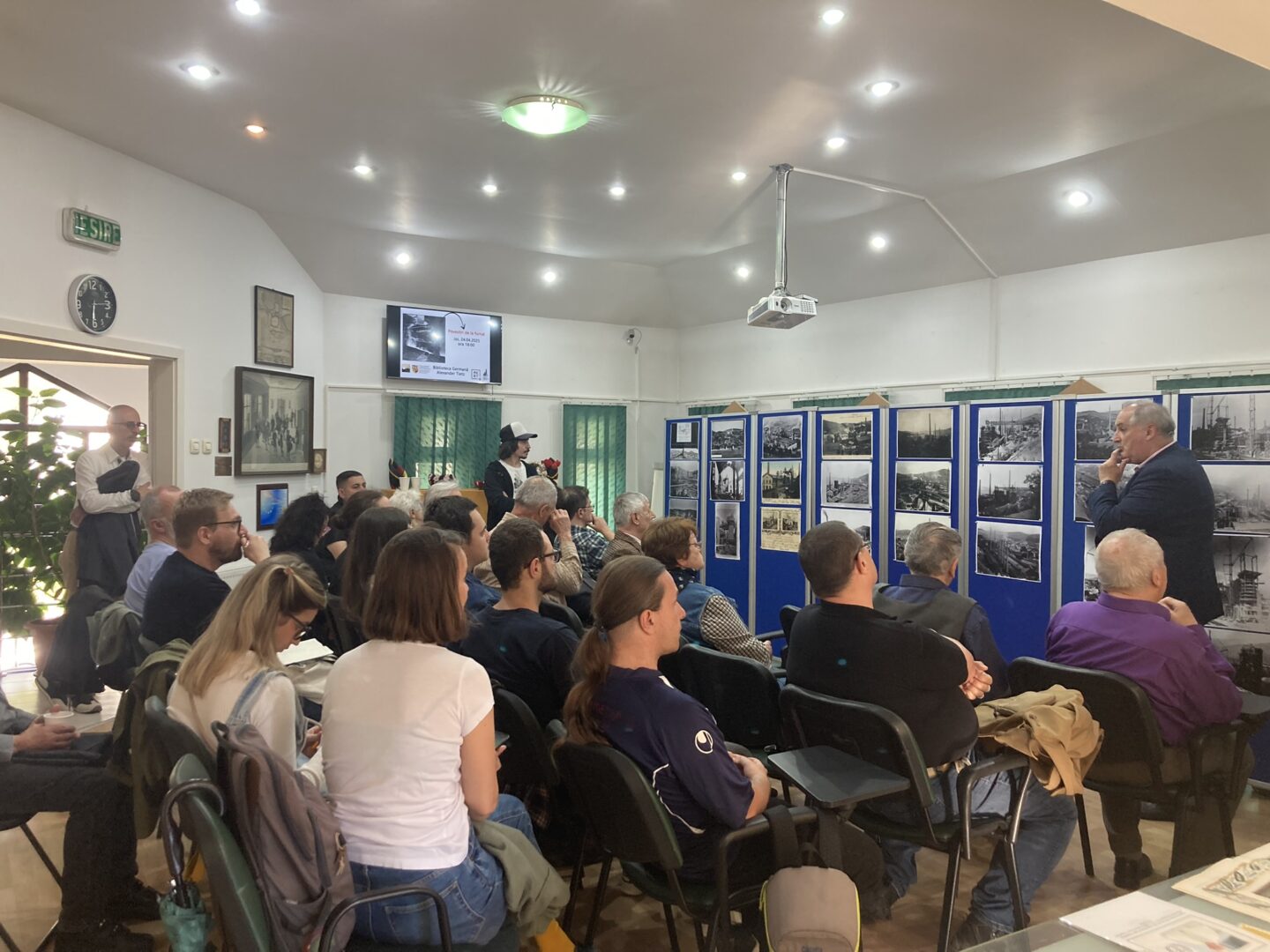
Complementing the visit, the German Library “Alexander Tietz” and the Amateur Filmmaker Museum prepared a photography exhibition and a film screening, which captured the evolution of the blast furnaces in Reșița over time. Some of us learned, others recalled how the efforts of the Reșița community members to save Blast Furnace No. 2 from demolition looked like — the last blast furnace among those built in successive technological stages over 250 years on the historic site of the furnaces in the old town. As usual, we were hosted and guided by the people who work daily for and together with the community: Ioan Popa, Mayor of Reșița, along with the city hall technical team, the local management of Artrom Steel Tubes company, as well as our friends and collaborators, the Amateur Filmmaker Museum.
We look forward to a year full of meetings with the Blast Furnace, memory, history, and the Reșița community. In the upcoming months, we will organize a public exhibition (both offline and online), based on the historical study and the research carried out but the oral histories group, a study visit to Dolni Vitkovice in the Moravia-Silesia region of the Czech Republic, and to the Historic Ignacy Mine, one of the oldest coal mines in Upper Silesia, southwestern Poland, with the aim of documenting international best practices regarding the functional conversion of decommissioned blast furnaces. A summer school will follow, bringing together students, faculty, and specialists in architecture, urban planning, and urban regeneration, to outline scenarios for the preservation and functional conversion of the blast furnace, with the goal of opening it to the public.
From August 1 to 3, we are organizing the second edition of the street event Street Delivery X UrbanEye Film Festival (check the first edition here), on Furnalelor Street and inside the new Pittner School Cultural Center, to meet people and debate the opportunity of safeguarding the blast furnace and sustainable scenarios for public valorization.
—
These activities are coordinated by MKBT, with the involvement and support of the Reșița City Hall and local partners the Amateur Filmmaker Museum and the Banatul Montan Community Foundation, as part of the project “We Stand Together Around the Last Blast Furnace.”
The project is co-funded by the The Administration of the National Cultural Fund (except for the summer school, which is financed by the Ordinul Arhitecților din România, through Timbrul de Arhitectură, The King’s Foundation, and the Reșița City Hall). The project is part of the broader Reșița 250 Lab urban regeneration endeavour—a laboratory initiated in 2023 by MKBT, which acts as a catalyst for an ecosystem of co-creation, testing, and implementing urban regeneration actions in Reșița.
Updates and news about this project will be shared by the organizers on www.muzeulvirtualresita.ro and www.mkb.ro.